
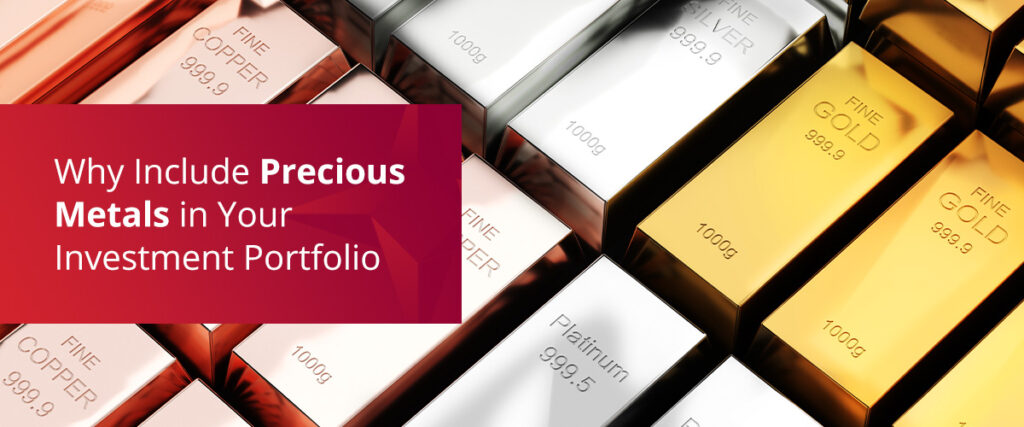
As a long-term investor, you want more than steady returns — you value stability, protection and balance in your retirement planning. Precious metals strengthen your portfolio by adding assets that move independently from traditional markets. They balance risk and protect buying power when other assets struggle.
Precious metals, like gold and silver, are tangible assets that move differently from traditional investments, such as stocks and bonds. Knowing how these precious metals work helps investors make steady, informed choices through uncertain times. They also act as a hedge against risks that may impact other investments.
Why Invest in Precious Metals
When inflation rises or currencies weaken, precious metals tend to keep their purchasing power. Their limited supply and global demand create long-term value that isn’t tied to earnings reports or interest rates. Each metal carries its own strengths, risks and market drivers, offering investors multiple ways to manage uncertainty. These key metals include:
- Gold: Gold is recognized for its rarity and enduring demand, serving as a global value store. It often holds purchasing power when currencies weaken or inflation rises.
- Silver: Silver is valued as a precious and industrial metal and has more price volatility than gold. It tends to react more quickly to market changes, which can create growth opportunities.
- Platinum: Platinum is known for its limited supply and broad industrial use, aligning closely with economic growth cycles. Its price can reflect shifts in manufacturing demand, especially in the automotive sector, which generates 40% of its demand.
- Palladium: Palladium is primarily used in catalytic converters, and its performance is driven by industrial trends. It often trades at higher premiums during production shortages.
You should add precious metals to your portfolio because they show resilience during economic slowdowns and inflationary periods. Gold and silver stay especially steady when equities lose momentum, while palladium and platinum mirror industrial recovery phases. This pattern reveals how each metal interacts with broader market forces — and understanding that sets the stage for exploring the benefits of including these assets in your portfolio.
3 Key Benefits of Including Precious Metals in Your Portfolio
Precious metals strengthen retirement portfolios by offering qualities that serve as both strategic and protective roles in the long run. Here are the key reasons for including precious metals:
1. Portfolio Diversification
Precious metals have low correlation with traditional assets, making this one of the most effective ways to reduce risk. Adding these assets to your portfolio diversifies risk across different asset classes, thereby decreasing exposure to single-market downturns. This balance helps your portfolio maintain stability and adds the option of physical ownership.
2. Hedge Against Inflation
Precious metals retain their value because their prices often rise in tandem with inflation. When the cost of living rises, purchasing power declines, and the option of physical ownership gives you a stronger sense of security. These assets serve as a safeguard when national currencies weaken, preserving real wealth regardless of monetary fluctuations. For example, if you invested $1,000 in gold 10 years ago, your investment would have risen by about 92% over the decade.
3. Potential for Capital Appreciation
Global supply limits and industrial demand influence pricing over time. As mining costs rise and reserves shrink, scarcity can drive higher long-term value for precious metals. For example, silver is used in renewable technologies such as solar panels, while platinum plays a key role in hydrogen fuel cells. This demand supports reliable price growth. The potential for appreciation adds another layer of growth opportunity to a well-balanced portfolio.
How to Invest in Precious Metals
Financial advisors recommend using a self-directed IRA, which lets you hold alternative assets such as precious metals while keeping the tax advantages of a retirement account. This structure gives you direct control over investment choices while meeting Internal Revenue Service (IRS) compliance standards.
The IRS has strict documentation and storage standards. Only certain physical bullion types and purity levels qualify, so transactions must follow reporting guidelines to maintain tax-advantaged status. Because this process involves multiple steps and legal requirements, partnering with an experienced service provider helps you avoid costly mistakes and streamlines your account management.
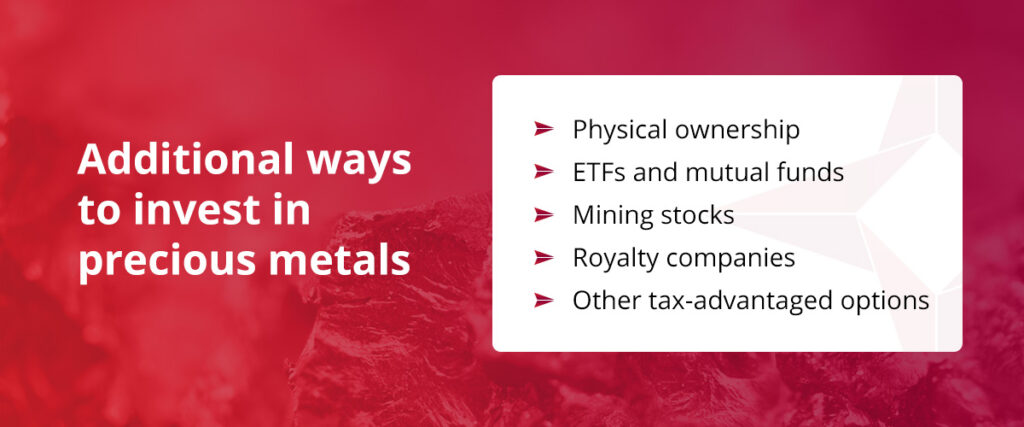
Additional ways to invest in precious metals include:
- Physical ownership: Directly buying coins or bars lets you store them at home or in a vault, offering you full personal control.
- ETFs and mutual funds: The most widely traded gold ETF is SPDR Gold Shares (GLD), which, as with other ETFs or mutual funds, gives you paper-based exposure without physical storage.
- Mining stocks: Investing in companies that produce metals gives you the potential for leveraged returns tied to pricing and production.
- Royalty companies: Through royalty companies, you get exposure to production revenue without the operational risk. Royalties often provide a steady cash flow.
- Other tax-advantaged options: You can also invest in precious metals held within certain trusts or retirement structures, depending on your eligibility and tax strategy.
Building a Balanced Precious Metals Investment Portfolio
Precious metals often make up 5% to 10% of a diversified investment strategy, depending on your portfolio risk management tolerance, time horizon and the market outlook. If you are more conservative, opt for a lower allocation focusing on gold and silver for stability. But if you want growth potential, include more platinum or palladium, which respond to industrial demand.
Strategic allocation requires periodic review. Rebalancing every six to 12 months helps keep exposure aligned with your plan. Many investors adjust allocations when interest rates, inflation or economic cycles change. A structured approach prevents emotional decision-making and keeps your portfolio positioned for consistent performance.
Why Choose Accuplan for Precious Metals Investing
Navigating IRS rules and custodial requirements for investing in precious metals can be complex. Accuplan Benefit Services simplifies the process with specialized expertise, secure solutions and transparent support. Our team focuses on helping you protect and grow your retirement savings with confidence through:
- Specialized IRA experience: Our team of professionals has extensive experience and knowledge in the intricacies of precious metal investment within retirement portfolios.
- Trusted support: With clear communication and personalized assistance, our experts answer your questions, offer personalized advice and help you add a precious metals IRA to your retirement portfolio.
- Intuitive dashboard: We’ve created a platform where individual investors and businesses can invest in precious metals and other assets more quickly and efficiently.
Secure Your Retirement With Accuplan
Precious metals offer stability, protection and growth potential within a well-structured retirement strategy. With proper allocation and strategic planning, these assets strengthen your financial foundation. Partnering with a trusted provider simplifies the investment process and helps ensure compliance.
At Accuplan Benefits Services, we understand how important professional guidance and transparency are when you’re building your retirement portfolio. As a trusted leader in traditional and self-directed Roth IRAs, we’re ready to guide you through the process of investing in precious metals and other alternative assets.
Contact us today to schedule a consultation and diversify your portfolio.

Disclaimer: Our information shouldn’t be relied upon for investment advice, but simply for information and educational purposes only. It is not intended to provide, nor should it be relied upon for accounting, legal, tax or investment advice.
Ready to start?
Open a self-directed IRA today.
10-minute application. Real human support.