
Comparing Traditional IRAs vs. Roth IRAs

Comparing Traditional IRAs vs. Roth IRAs

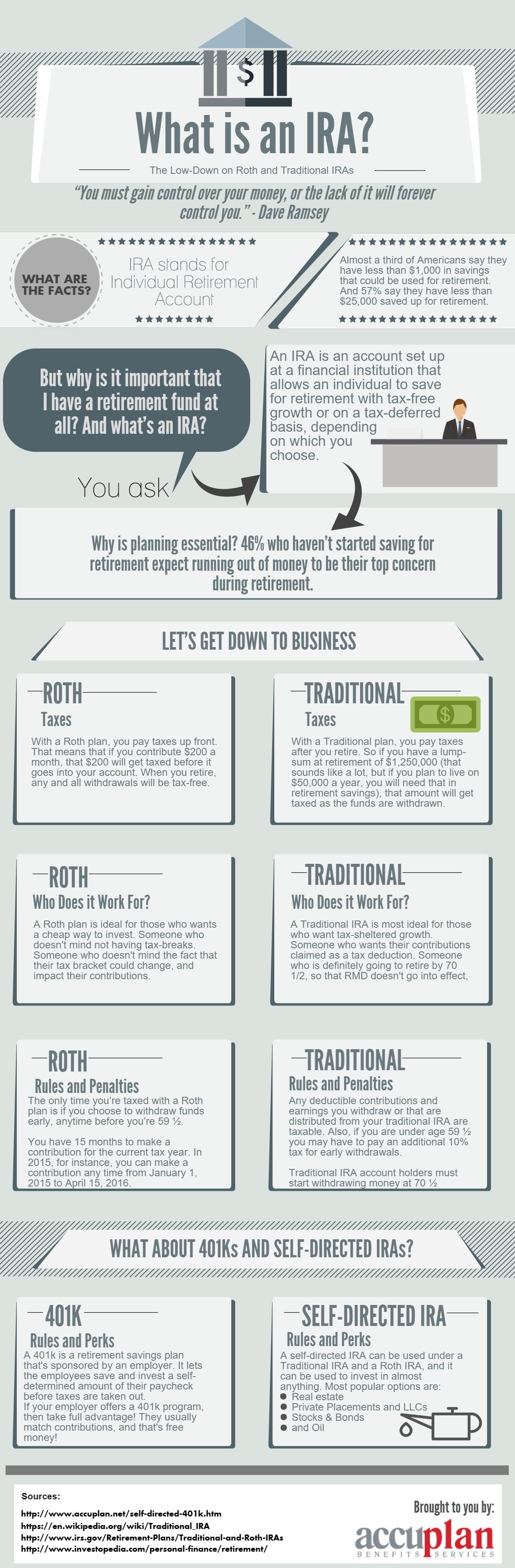
Retirement is a milestone that inspires a mix of excitement and uncertainty. It’s natural to wonder whether your current savings and investment strategy will support the lifestyle you envision for the years ahead. Traditional IRAs and Roth IRAs are two options for investing in your future while taking advantage of valuable tax benefits. They’re especially worth learning about if you’re self‑employed or looking to expand your retirement portfolio. 

Understanding how these retirement accounts work can help you decide which aligns better with your financial goals, tax outlook and long‑term plans. This guide breaks down the core differences between Roth and traditional IRAs so you can choose the account that fits your broader investment strategy. Whether you invest in stocks, bonds, real estate or alternative assets like crypto, the goal is to give you more control and confidence as you build the retirement you’ve always dreamed of.

Quick Comparison of a Traditional IRA vs. Roth IRA

This table contrasts the notable differences between a traditional IRA and a Roth IRA.

Quick Comparison of a Traditional IRA vs. Roth IRA
Traditional IRA vs. Roth IRA At A Glance
Traditional IRARoth IRA
2026 Contribution Limit$7,500 ($8,600 with catch-up)$7,500 ($8,600 with catch-up)
Tax on ContributionsPretax, potentially deductibleAfter-tax, not deductible
Tax on WithdrawalsTaxed as incomeTax-free if qualified
RMDsYes, starting at age 73No for original owner
Income LimitsNo limit to contribute, but limits for deductionYes, MAGI phase-outs apply

What Is a Traditional IRA?

From tax benefits to contribution and deductibility limits, traditional IRAs offer distinct benefits and disadvantages. Discover the ins and outs of a traditional IRA.

How Traditional IRAs Work

When you have a traditional IRA, you make contributions with pretax money. While you’ll have to pay taxes on your distributions, they may be tax-deductible if qualified.

Traditional IRAs also have restrictions that might make them less advantageous. In addition to the standard taxes, there will be an extra 10% tax on distributions you take before age 59 1/2. You must also make required minimum distributions after reaching a specific age.

Tax Benefits

The primary advantage of a traditional IRA is that you can deduct your contributions today and pay taxes when you make future withdrawals. In some financial situations, this may be more advantageous. For example, your contributions might lower your adjusted gross income enough to qualify you for other tax incentives.

2026 Contribution Limits

The most recent limits on annual contributions for a traditional IRA are $7,500 or $8,600 if you’re 50 or older. Your contribution may not exceed your taxable compensation for the year, even if it falls within the legal limit.

Since 2020, traditional IRAs have had no age limit on regular contributions.

Income Limits and Deductibility Rules

Anyone with earned income can contribute to a traditional IRA, but you may have a limited ability to deduct that contribution if you also have a workplace retirement plan and your income exceeds a specific level.

For a traditional IRA, new phase-out ranges are between $81,000 and $91,000 for single taxpayers and between $129,000 and $149,000 for married couples filing jointly.

Required Minimum Distributions

Required minimum distributions are a defining feature of traditional IRAs. Starting on April 1 in the year after you turn 72, you must begin taking withdrawals from your IRA. 

To calculate your required minimum distribution, divide the total account balance at the end of the preceding year by the distribution period from the IRS Uniform Lifetime Table.

What Can You Invest in With a Traditional IRA?

Standard IRAs limit you to investing in common securities, such as stocks, bonds, certificates of deposit or exchange-traded funds.

Generally, with a standard IRA, you cannot invest in life insurance contracts or collectibles such as art, antiques or alcoholic beverages. However, with a self-directed IRA, your investment options open to include cryptocurrency, private equity, real estate and precious metals.

What Is a Roth IRA?

With a Roth IRA, you make contributions with after-tax money, which means your contributions to a Roth IRA are not tax-deductible. However, since you’ve already paid taxes on your contributions, your distributions after age 59 1/2 won’t have taxes or penalties.

How Roth IRAs Work

Since you make Roth IRA contributions with after-tax money, your withdrawals in retirement are tax-free. This taxing structure differs from a traditional IRA and makes a Roth IRA the ideal choice if you anticipate your taxes will be higher after retirement than they are today.

With a Roth IRA, you can make tax-free withdrawals anytime after age 59 1/2 if your account is at least five years old. Notably, “tax-free” refers to your withdrawals — you still pay income tax on the money you contribute before it goes into the account. You can’t contribute securities or property to a Roth IRA.

Tax Benefits

Just like with a traditional IRA, the primary benefit of a Roth IRA is tax-free growth and withdrawals in retirement. However, unlike a standard IRA, contributions to a Roth IRA are not tax-deductible, since the funds you withdraw later will be exempt.

Another commonality between a standard IRA and a Roth IRA is that excess contributions are subject to a 6% tax each year they remain in the account.

2026 Contribution and Income Limits

For 2026, the contribution limits for Roth IRAs are the same as those for normal IRAs at $7,500. With the additional $1,100 allowed catch-up contribution after age 50, the total cumulative contribution across IRA types is $8,600.

Roth IRA eligibility begins to phase out once your modified adjusted gross income reaches a specific threshold. If your income falls within or above that range, you can contribute a reduced amount — and at the upper end, you can’t contribute at all. For 2026, the MAGI phase‑out range is $153,000 to $168,000 for single filers and heads of household, and $242,000 to $252,000 for married couples filing jointly.

No RMDs for Continuous Tax-Free Growth

A leading advantage of a Roth IRA over a traditional IRA is that the original account owner has no required minimum distributions. In other words, your full investment amount, along with all your contributions, can grow in your account tax-free until you decide to withdraw. A Roth IRA is a powerful estate planning tool, since your beneficiaries will inherit tax-free money.

What Is the 5-Year Rule?

You can withdraw from your original deposit into a Roth IRA at any time, but to benefit from tax-free withdrawals on earnings, you must wait five years from the first contribution. Additionally, if you want to convert a standard IRA into a Roth IRA, you must wait five years to avoid penalties or taxes.

What Can You Invest in With a Roth IRA?

What Can You Invest in With a Roth IRA?

A Roth IRA allows you to invest in the standard securities, such as stocks, bonds, ETFs, real estate investment trusts and cryptocurrencies aimed at tax-free growth. This option also lets you diversify your portfolio by investing in alternative assets, such as real estate, precious metals, private equity, tax liens and all forms of cryptocurrency. However, just like a standard IRA, you can’t include collectibles such as art, stamps or wine.

Which IRA Is Better for You?

When comparing a Roth IRA vs. a traditional IRA, consider your eligibility, future income and future income tax bracket.

Choose a traditional IRA if you:

  • Want the immediate benefit of a tax deduction on contributions
  • Expect to be in a lower tax bracket in retirement than you are now
  • Are in your peak income-earning years
  • Need to reduce your current adjusted gross income

Opt for a Roth IRA if you:

  • Expect to be in a higher tax bracket later in life than you are now
  • Want the tax-free benefit to supplement retirement income
  • Are younger and can take full advantage of the compounding effect
  • Want no required minimum distributions after age 72

Select a self-directed traditional IRA if you:

  • Want the advantage of tax deduction along with alternative asset options
  • Plan to invest in real estate or private equity

Invest in a self-directed Roth IRA if you:

  • Want to invest in high-growth alternatives with a tax-free advantage
  • Expect cryptocurrency or real estate to appreciate significantly
  • Want to pass a tax-free inheritance of alternative assets to your beneficiaries

Pros and Cons of Traditional IRAs

Understanding the distinctions between traditional and Roth IRAs allows you to make a clear-eyed assessment of their benefits and drawbacks. Your choice ultimately depends on your specific needs and long‑term plans.

Traditional IRA advantages:

  • Immediate tax-deductible contributions during the same year
  • Deferred taxes allow investments to grow faster
  • No income limits on making annual contributions

Potential shortcomings of a traditional IRA:

  • Withdrawals after retirement are subject to income tax
  • Early withdrawals before age 59 1/2 trigger penalties and income tax
  • RMDs force you to pay taxes after age 73, regardless of whether you need the distributions

Pros and Cons of Roth IRAs

A Roth IRA shares many of the benefits and disadvantages of a traditional IRA, but this account type also has distinctions to be aware of.

Roth IRA pluses:

  • Earnings and contributions are tax-free after age 59 1/2
  • Withdraw your contributions at any time without taxes or penalties
  • Tax-free retirement income balances taxable income from a traditional IRA or 401(k)

Roth IRA minuses:

  • High earners outside of the MAGI range cannot make contributions
  • Lower future taxes could mean paying more on after-tax contributions now
  • No tax deductions on contributions since they come from after-tax income

Self-Directed IRAs Expand Your Investment Options

self-directed IRA is an individual retirement account that allows you to invest your retirement funds in alternative assets to diversify your investment portfolio beyond standard securities.

Self-Directed IRAs Expand Your Investment Options

The most common alternative investments available under an SDIRA include:

  • Real estate
  • Cryptocurrency
  • Precious metals, including gold, silver, platinum and palladium
  • Private equity

Frequently Asked Questions

Investing can seem complex. Even if you have a solid grasp of the distinctions between traditional and Roth IRAs, you may not foresee how these retirement accounts fit into your financial goals and retirement plans. Here are answers to some of the most frequently asked questions about IRAs.

Can I Have Both IRA Types in My Portfolio?

Yes. However, remember that IRA contribution limits are cumulative, meaning your combined contributions across both IRAs may not exceed $7,500 (or $8,600 with catch-up).

Can I Convert a Traditional IRA to a Roth IRA?

You can convert your standard IRA into a Roth IRA anytime, regardless of your income level. After you convert, you must wait five years before you can withdraw the earnings tax-free. If you take earnings out before those five tax years have passed, they may be subject to taxes and penalties.

What Is a Backdoor Roth IRA?

A backdoor Roth IRA is a two-step process that legally allows you to bypass the income-based contribution limits for a Roth IRA. First, you make an after-tax contribution to a standard IRA. Then, you convert it into a Roth IRA for tax-free growth and withdrawals.

Can I Invest in Real Estate With My IRA?

You can invest in real estate when you choose a self-directed IRA, since they offer alternative investment options to diversify your portfolio. Under a standard or Roth IRA, you cannot invest in real estate.

Can I Hold Cryptocurrency in an IRA?

Yes, you can invest in cryptocurrency with an SDIRA, since it falls under alternative investment options. However, you’ll need a knowledgeable, specialized custodian to manage your account.

Open a Self-Directed Traditional or Roth IRA With Accuplan

Open a Self-Directed Traditional or Roth IRA With Accuplan

Ultimately, the choice between a standard and a Roth IRA depends on whether you want to pay taxes now or later. 

For those who want more control over their investments, self-directed IRAs offer maximum flexibility and an attractive array of alternative investment options.

When you’re ready to invest in your future, Accuplan can help. With decades of experience in retirement accounting, we can provide the guidance you need to add alternative investments to your portfolio. If you feel limited by traditional retirement accounts, apply today to open a self-directed IRA with Accuplan.

Our information shouldn’t be relied upon for investment advice but simply for information and educational purposes only. It is not intended to provide, nor should it be relied upon for accounting, legal, tax or investment advice.

Nick Barker

With over 11 years in the self-directed IRA industry, I’ve helped individuals take control of their retirement by unlocking the power of alternative investments. I specialize in making complex concepts simple, from private lending and real estate to crypto and precious metals — all within the framework of tax-advantaged accounts. My goal is to educate, simplify, and empower investors to diversify beyond Wall Street.

Subscribe to Our Newsletter!

Get industry related news, tips, tricks and techniques for alternative investing.

arrow-down